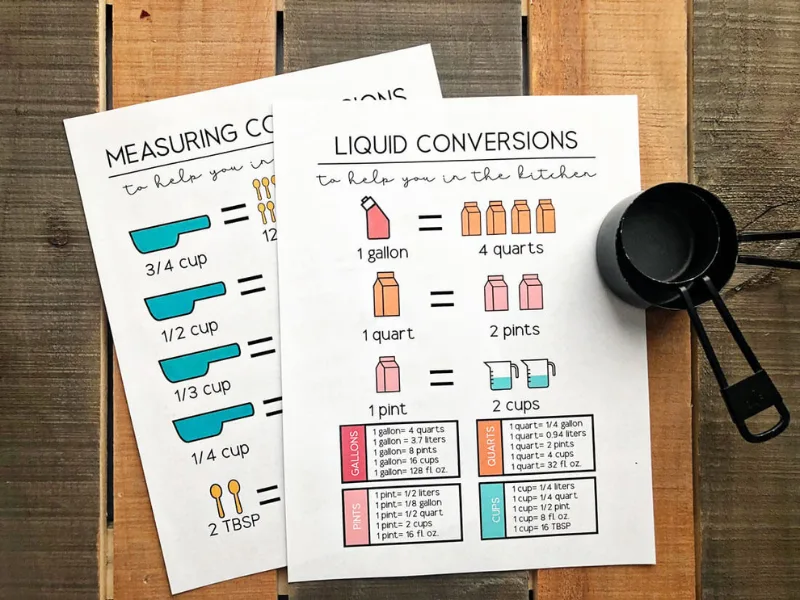
Cooking and baking are often a blend of science and art. Whether you’re whipping up fluffy pancakes or crafting the perfect chocolate chip cookies, one thing never changes—the need for precise measurements. If you’ve ever stopped mid-recipe to double-check, “How many 1/4 cups make 1/2 cup?” don’t worry—you’re not alone! That’s what we’re here to answer. This guide will break it all down for you, from the math behind the measurements to practical tips for success in the kitchen. Let’s make measuring as easy as pie (pun intended!).
Understanding Measurement Units
Before tackling the 1/4 and 1/2 cup question, it’s helpful to understand why measurements like cups are so crucial in cooking, especially baking. Cups are a standard unit used in recipes across the United States, providing a convenient way to measure wet and dry ingredients without needing a kitchen scale.
Fractions, like 1/4 or 1/2, represent portions of a whole cup. Think of it like slicing a pizza into equal parts; if you were to cut a pizza into four slices, each slice would be a “quarter,” or one-fourth of the pizza. Pretty straightforward, right? The same principle applies to your measuring cups!
With that in mind, let’s solve the puzzle of how many 1/4 cups make 1/2 cup.
The Math Behind 1/4 Cups and 1/2 Cup
If math isn’t your favorite subject, don’t stress—this one is simple, and we’ll walk through it.
Step-by-Step Breakdown
- A “whole” cup equals 1 cup.
- If you divide 1 cup into 4 equal parts, each part equals 1/4 cup.
- To reach 1/2 cup, you need half of a full cup.
- Therefore, 1/2 cup = 2/4 cups.
The answer: It takes two 1/4 cups to make 1/2 cup.
It’s that easy! Here’s a quick visual to make it even clearer:
- 1/4 cup + 1/4 cup = 2/4 cups = 1/2 cup
Next time you’re cooking and need 1/2 cup but only have a 1/4 measuring cup handy, you’ll know exactly what to do!
Practical Applications in the Kitchen
Now that you know the math, how does this knowledge apply to real kitchen scenarios? Here are some examples and tips to help you measure with confidence.
Common Ingredients Measured in 1/4 or 1/2 Cups
- Flour
When baking cakes or cookies, flour is often measured in 1/4 or 1/2 cup increments. Remember to level off the top of your measuring cup with a knife for accurate results!
- Sugar
Granulated sugar, brown sugar, and powdered sugar are frequently measured in these smaller increments for sweet treats. Ensure you lightly pack brown sugar into the measuring cup for precise measurements.
- Liquids
For recipes like pancakes or sauces, 1/4 or 1/2 cups of liquids like milk, oil, or water may be required. Use a liquid measuring cup to see the levels clearly.
- Grains
Ingredients like oats or rice are often portioned in these cup sizes when preparing meals or snacks.
Tips for Accurate Measuring
- Use the Right Tools
Have a set of measuring cups with accurate markings. Invest in a reliable set of both dry and liquid measuring cups to ensure consistency.
- Spoon & Level for Dry Ingredients
For dry goods like flour, spoon them into the measuring cup and level off the excess for a precise measurement.
- Check Eye Level for Liquids
When measuring liquids, pour the ingredient into a liquid measuring cup and check it at eye level to avoid over or under-measuring.
- Remember the Fractions
Keep in mind that fractions are your friend! If you’re doubling or halving a recipe, think of your cups in terms of fractions to measure accurately.
Why Accurate Measurements Matter
Measuring ingredients correctly can mean the difference between success and failure in the kitchen. For example, too much flour can lead to dense cookies, while too little liquid can result in a dry cake. Precision ensures the chemistry of baking or cooking works as intended, and your finished dish turns out just right.
Final Thoughts
Mastering measurements, like understanding how two 1/4 cups equal 1/2 cup, empowers you to cook and bake with confidence. By breaking down recipes into manageable steps and relying on clear measurements, you’ll avoid unnecessary stress and get better results every time.
Don’t stop here—our blog is packed with more tips and tricks to make your time in the kitchen even better. Not sure how to level flour correctly? Confused about converting tablespoons to cups? We’ve got you covered. Explore more of our measurement guides and start your next culinary adventure!